
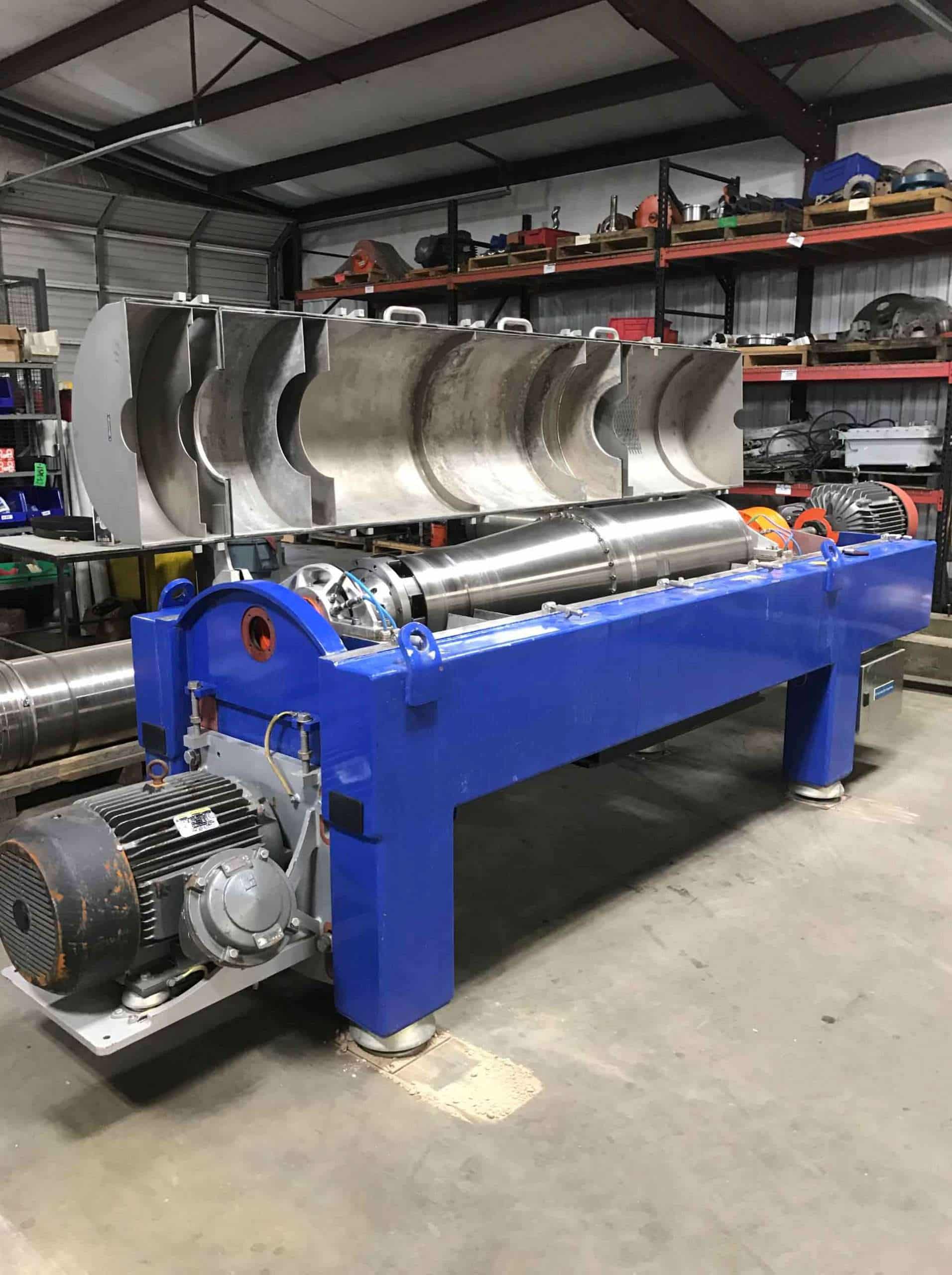
Catch the warning signs before the breakdown
A decanter centrifuge that is heading toward failure almost always tells you first. The rotating assembly spins at high speed under heavy process load, and as bearings wear, surfaces erode, and the scroll loses its edge, the machine gives off measurable and audible symptoms. Catching them early is the difference between a scheduled repair and an unplanned production stop.
Here are the five warning signs to watch for, what each one usually means, and when to call for service.
1. Increased vibration
Vibration is the most common early warning. A decanter that has begun to run rough, walk on its mounts, or trip vibration sensors is usually out of balance. Product buildup in the bowl, a worn or damaged conveyor, bearing wear, or a rotating assembly that has drifted out of balance will all show up as vibration.
Rising vibration should never be ignored. Left alone it accelerates bearing and seal wear and can lead to contact damage inside the bowl. Static and dynamic balancing during a rebuild restores smooth operation, but the trend is the signal to act.
2. Bearing noise or heat
Bearings are wear items, and they announce their decline. Grinding, whining, or rumbling noises and bearings that run hotter than normal are classic signs that the main bearings are breaking down.
A failed decanter bearing at full speed can cause serious secondary damage to the shaft, bowl, and conveyor. Unusual noise or heat is a reason to schedule service promptly rather than run the machine to failure.
3. Reduced separation performance
If your centrate is getting dirtier, your cake is coming out wetter, or throughput has quietly dropped, the machine is losing separation efficiency. Worn surfaces, eroded flights, and a rotating assembly that is no longer holding its geometry all degrade performance.
Because this change is gradual, it is easy to compensate for until the numbers no longer make process sense. A drop in separation quality is a strong signal that the machine needs inspection and reconditioning.
4. Scroll and conveyor wear
The scroll, or conveyor, does the abrasive work of moving solids along the bowl, so it wears faster than almost any other component. Worn or eroded scroll flights, damaged tiles or hardfacing, and buildup on the conveyor reduce conveying efficiency and pull the assembly out of balance.
Scroll wear ties directly back to signs one and three: as the conveyor degrades, you often see both rising vibration and falling separation. Reconditioning or rehardfacing the scroll is a core part of a decanter rebuild.
5. Gearbox trouble or rising motor amperage
The gearbox controls the differential speed between bowl and scroll, and it is a common failure point. Gearbox noise, leaks, or backdrive problems point to internal wear. Watch the main drive amperage too: a motor pulling steadily higher current than normal often means the machine is working against wear, buildup, or a struggling gearbox.
Rising amperage and gearbox symptoms are the machine telling you it is straining. Addressing the gearbox and drivetrain early prevents a cascade of related failures.
See any of these signs? Get an inspection
One of these symptoms is a reason to watch closely; two or more together is a reason to schedule service now. A documented inspection identifies exactly which components are worn and what the machine needs before a small issue becomes a failure.
Learn about our decanter centrifuge repair and centrifuge inspection services, or explore gearbox repair if the drivetrain is the concern. When a decanter goes down without warning, call our 24/7 emergency line at 832-338-4990.